


/
Nothing in the world is as soft and yielding as water. Yet for dissolving the hard and rigid, nothing can surpass it…True words seem paradoxical (Daodejing verse 78)
Look at it, it cannot be seen. It is called colorless. Listen to it, it cannot be heard. It is called noiseless. Reach for it, it cannot be held. It is called formless. These three things cannot further be analyzed. Thus they are combined and conceived as a unity which on its surface is not clear and in its depth not obscure. And it returns to that which is without substance. This is called the shape with no shape, the image of the imageless. (Daodejing verse 14)
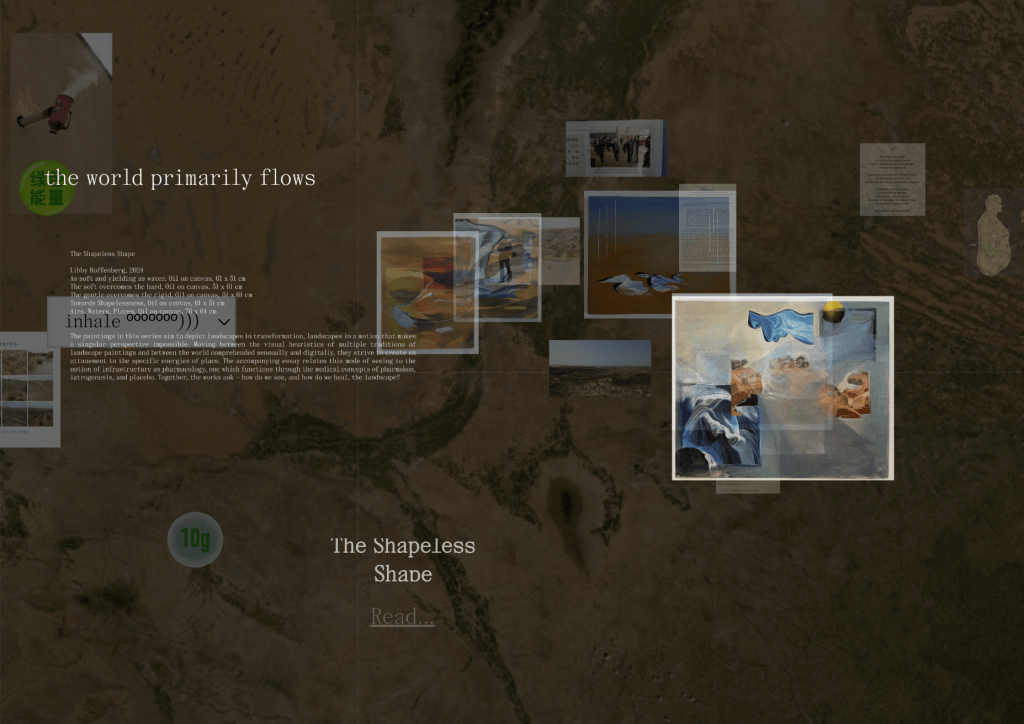
How does one give form to a landscape comprised primarily of change and only incidentally of substance? How can one come to see in a landscape both its vital breath and its skeletal structure?
Paintings, worlds – a chance to see differently. The imperfect transcendence of the image from its material substrate.
The doctrine of five elements or five phases (五行) dates to the 4th century BCE, and describes cycles of transformation governing the health and disease of bodies. The elements become one another in a series of cyclical relationships, the two most important being mutual generation (相生) and mutual overcoming (相克). In mutual generation:
Wood generates fire, bursting into flame.
Fire generates soil, reducing wood to ash.
Soil gives birth to metal, in veins of ore beneath the earth.
Metal gives birth to water, liquefying when heated
Water generates wood, nourishing the growth of plants
In mutual overcoming:
Soil overcomes water, by damming or absorbing it.
Wood overcomes soil, by digging with spade and plow.
Metal overcomes wood, by cutting with the blade.
Fire overcomes metal, by melting it to liquid.
Water overcomes fire, by extinguishing it.[i]
In contrast to the cycle of mutual generation, which embodies cyclical and seasonal relationships found in the nonhuman world, the cycle of mutual overcoming is begotten only through humans and a series of certain human techne. The cycle of mutual overcoming is maintained through the practices of hydraulic engineering, irrigation and agriculture, carpentry, and metallurgy.
The simultaneity of these cycles embodies the ambiguous posture of humanity and human technology in the world of elemental cycles, which is the world. Humans are both a part of and apart from the movements that perpetuate existence. To be healthy is to be aligned with these movements. The paradoxical nature of health is that it is a state both self-sustaining and requiring of ongoing intervention.
The danger is that the intervention can become the disease – pharmakon. The life of forms takes on a logic of its own, a shapefulness of world that obscures the transformations that constitute it in its state of health, which is change.
The logic of forms – iatrogenesis. The priest and social critic Ivan Illich foregrounded the concept in his work: from the Greek iatros, meaning doctor, it designates the malady caused by the doctor and the doctor’s medicines. Technical and managerial measures create a self-reinforcing loop that at best partially overlaps with the etiology of the disease but is never identical with it. The solidity of recognition, of diagnosis, of naming, is always temporary and partial.
Iatrogenesis emerges from the medicalization of health – the forgetting of a capacity to sense and respond to the reciprocal dynamics of inner and outer worlds, and the prosthetisization of this capacity for sensing. The medicalization of health is part of a larger medicalization of the social world, as “the patient in the grip of contemporary medicine is but one instance of mankind in the grip of its pernicious techniques.”[ii] Overuse of antibiotics causes more virulent forms of infection, as in Illich’s example, the anti-pollution machine pollutes.
At every level, medicalization operates through technological standardization and the de-contextualization of experiential knowledge, as “powerful medical drugs easily destroy the historically rooted pattern that fits each culture to its poisons.”[iii]
The performance of universal solutions, the healing drama – placebo. Studies on open-label placebo show that often what is important is not the chemistry but the ritual. Yet, although ritual powerfully reduces pain, it rarely changes the underlying pathology.
Infrastructure as pharmacology is the presumption of the universal fittingness of form to the spiritual-material specificities of a landscape, an abstraction of place into space. As infrastructure projects futures through the self-perpetuation of its industrial logics, the temporality of health may require engaging with the etiological histories of specific places. Landscape, like a body, has a history.
Merleau-Ponty wrote that Cezanne tried to paint the landscape as an emerging organism. He tried to paint the genealogy of form.[iv] The hidden and necessary opposite is that the origin of structure implies also its disintegration.
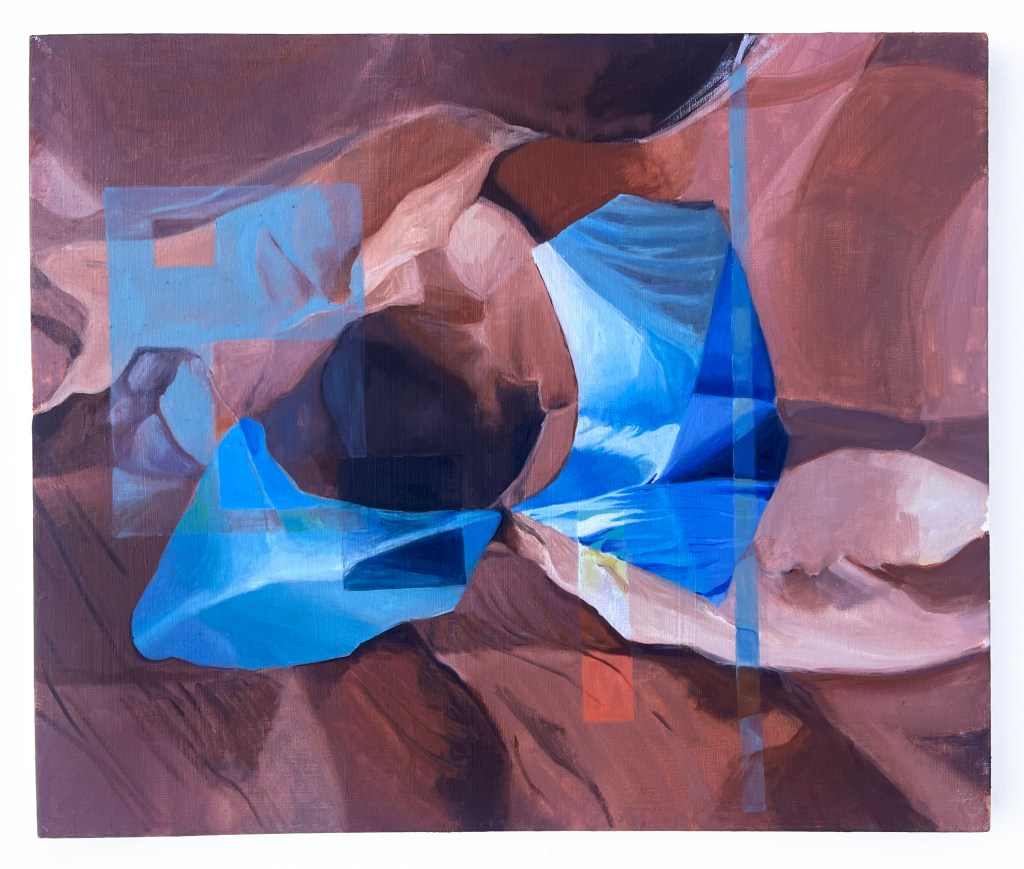
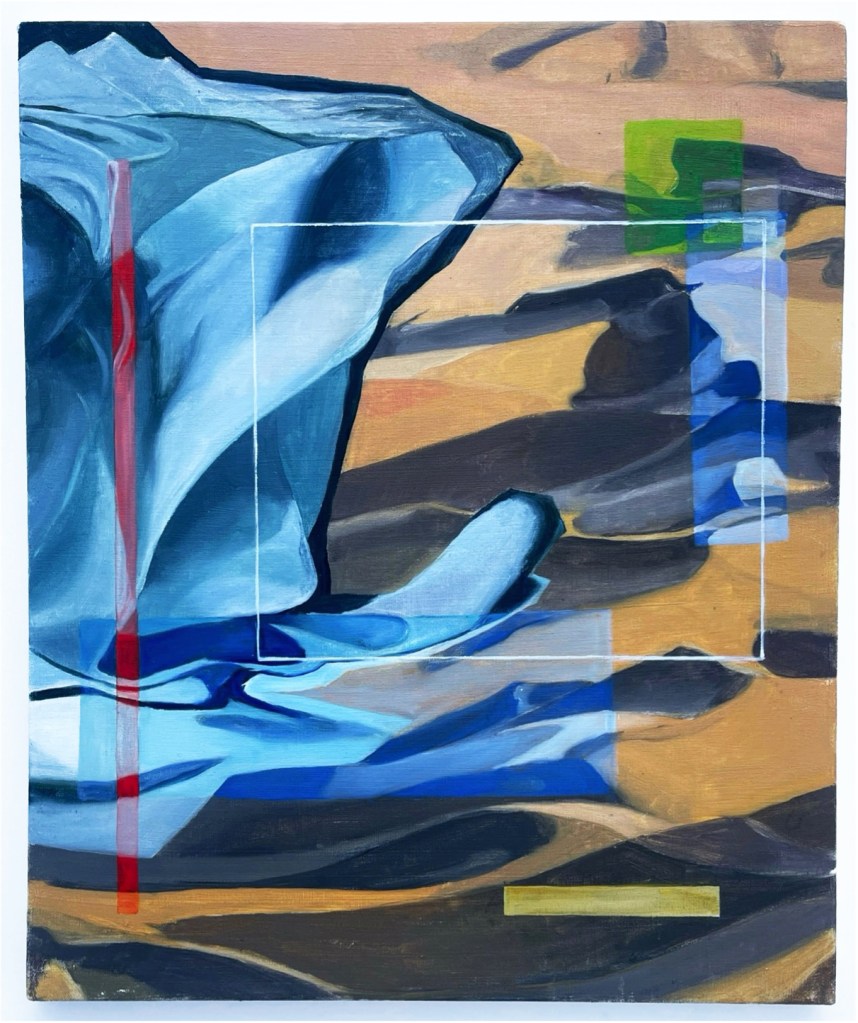
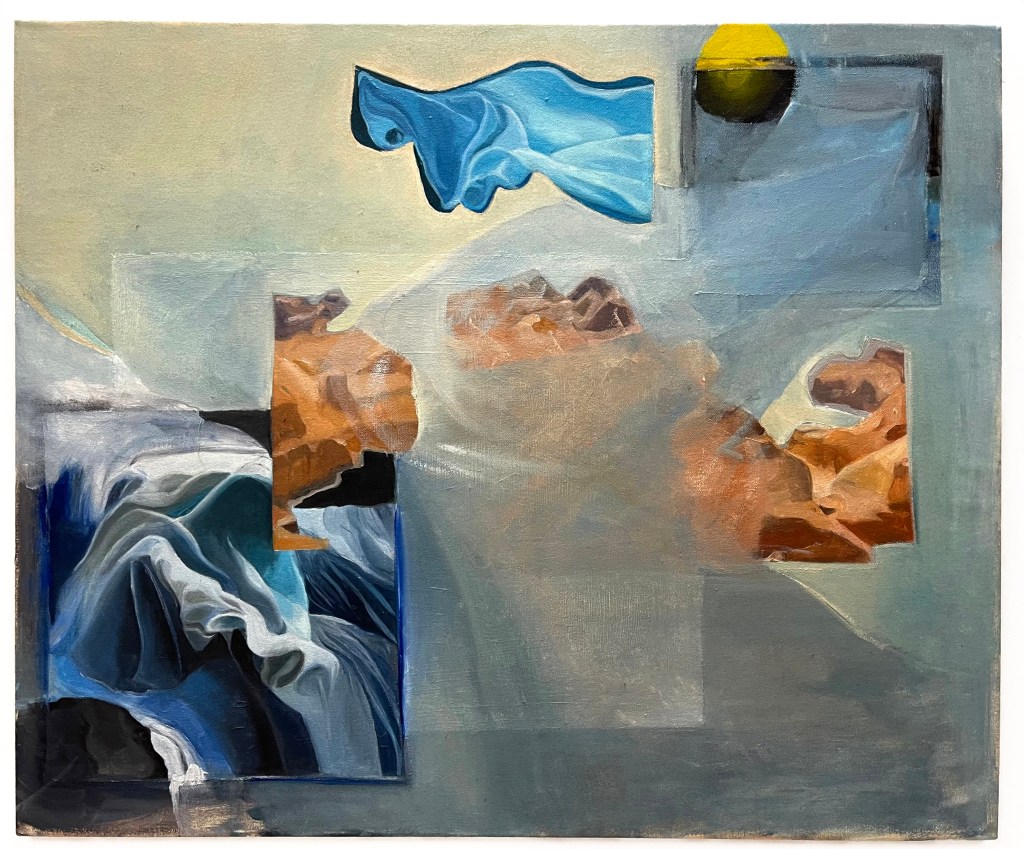
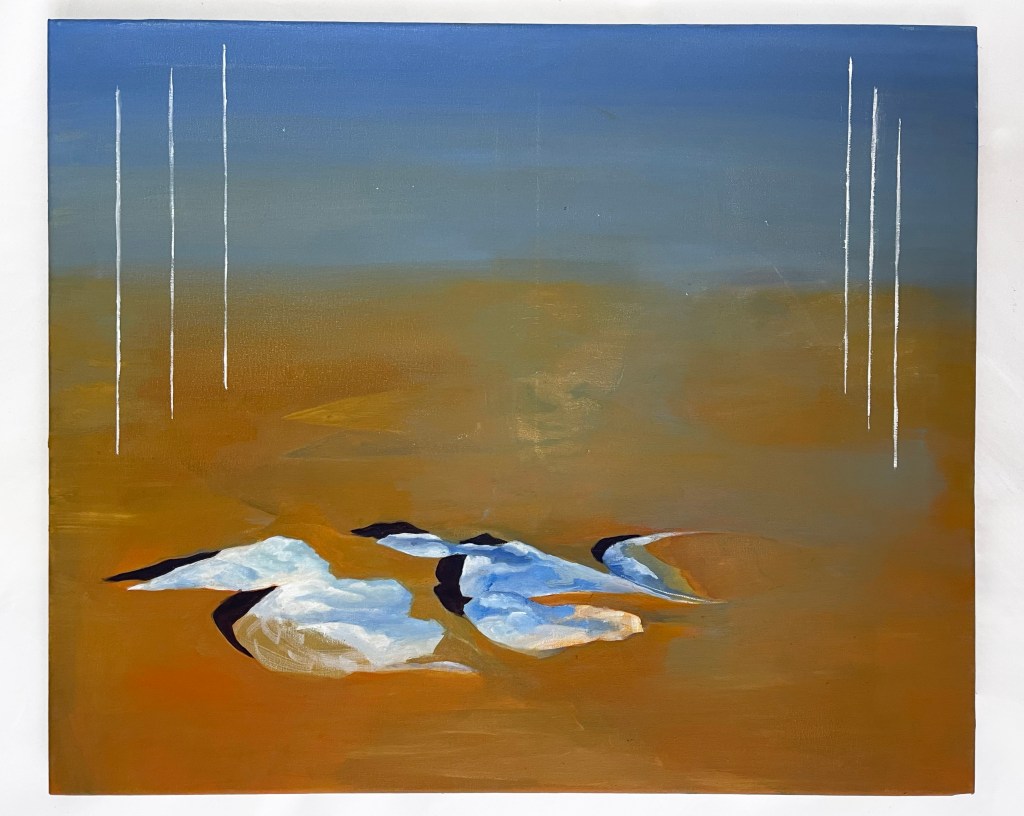
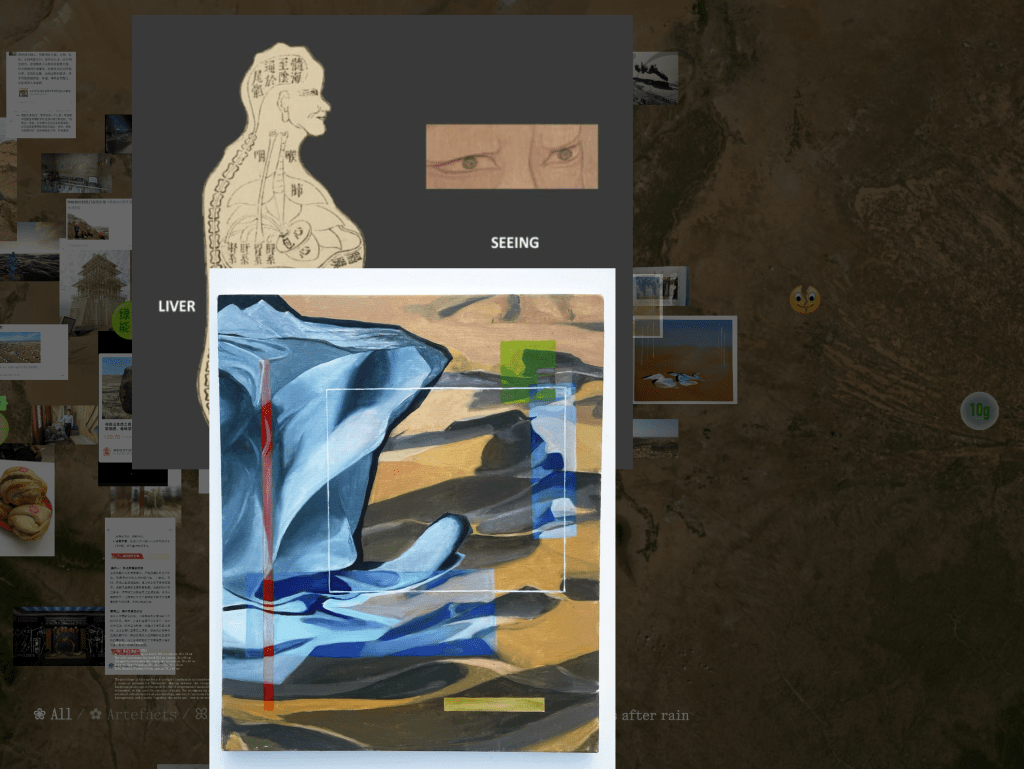
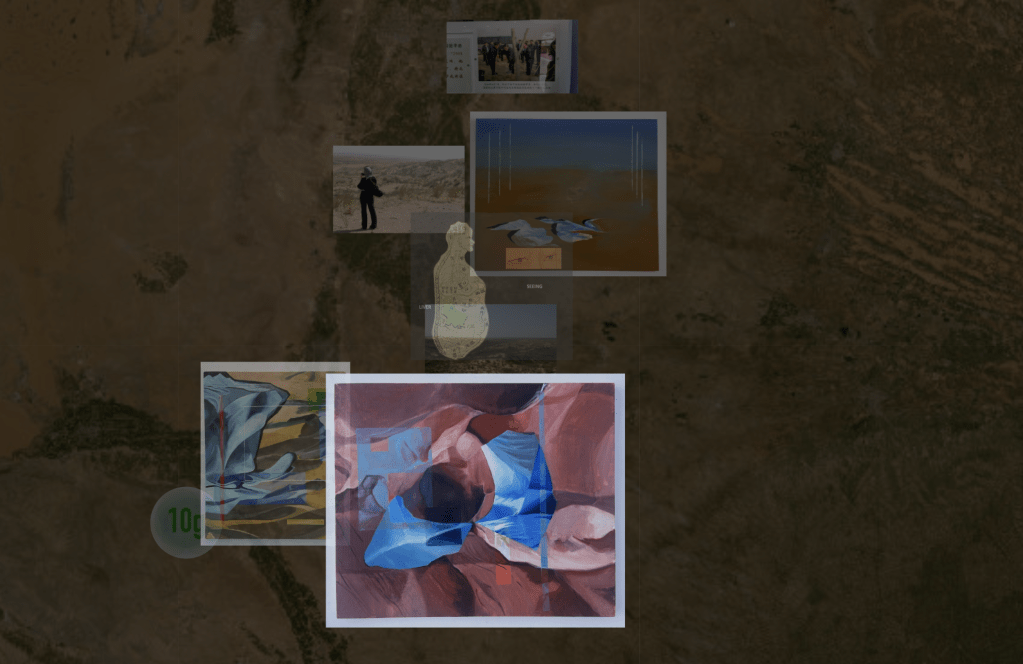
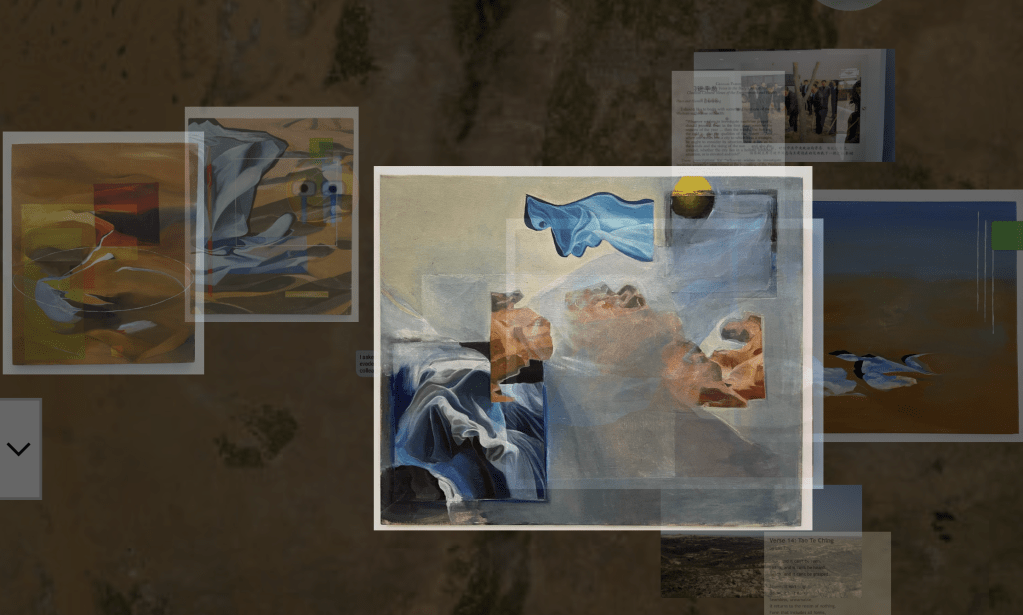
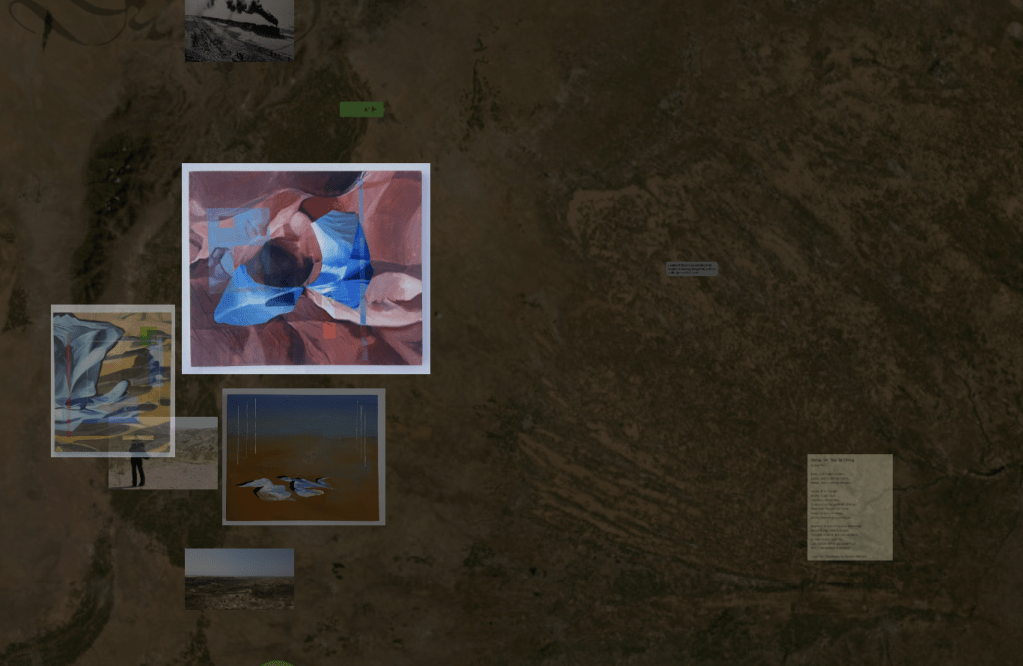
More interested in the passages between things than in the things themselves, these paintings strive to create a visual language for landscape based on energetics over morphology. Comprised of qi, the world primarily flows. Form is the shape of this otherwise shapeless flow.
In their execution, the paintings merge traditional painted and digital visual languages, employing color and form alongside lines and transparent geometries. This interplay creates an uneasy tension between image and material, giving visual expression to the dance between structure and transformation. The mathematical precision of line falters as it becomes material, placed in time through the gesture of hand and body. Layered transparencies reveal and conceal; there is an ambivalent relation between surface and depth.
What shape will we give the world recognized as dialogue between form and formlessness?
[i] Graham Parkes, “From Earth’s Veins to the Body’s Meridians: Classical Chinese Views of the Environment and Health”
[ii] Illich, Medical Nemesis
[iii] Illich
[iv] Merleau-Ponty, “Cezanne’s Doubt”
Created for Design in Rising Winds with Flora Weil and M+ Design Trust
 Libby Jennifer Hoffenberg